The lifecycle of a grant-funded program is usually predictable: funding is announced, a plan is built, work gets done, and reports are written. Then, everything ends. Too often, funders move on and so does the work. For communities, that abrupt stop can be destabilizing. Wraparound supports disappear. Promising pilots stall. Workers who were counting on a reliable path to a good job see that path crumble.
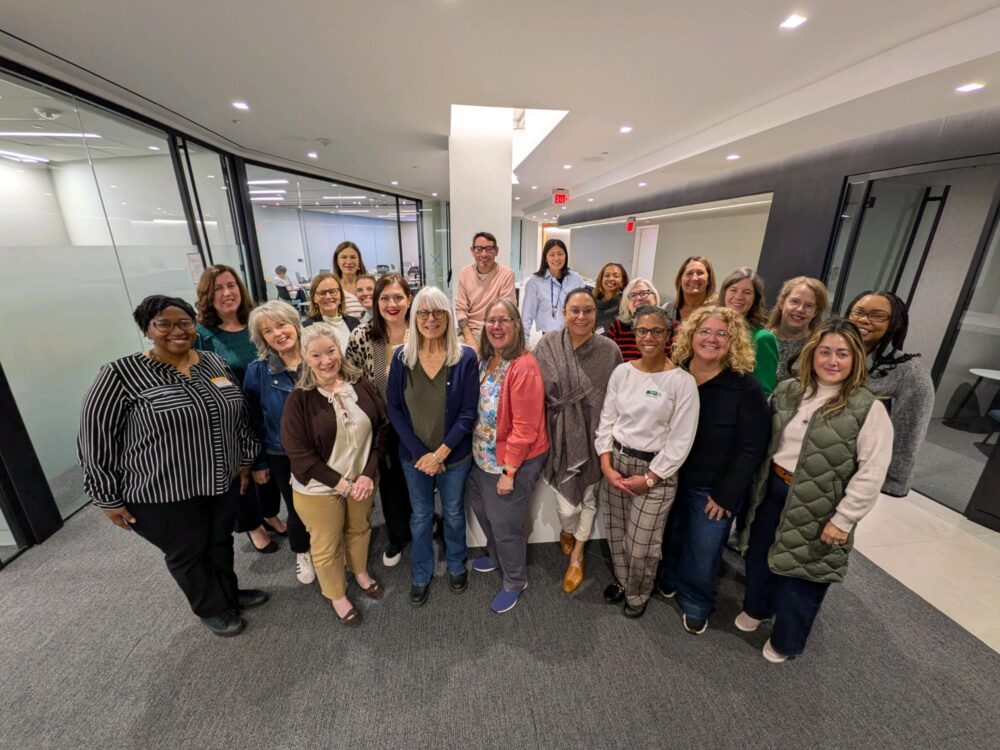
But when the National Fund gathered with our Network Partners in mid-November to close out the first phase of our Shifting the Childcare Industry initiative, we witnessed the opposite. The funding period had ended, but the work had not. In fact, it was accelerating.
This wasn’t new to us. On a recent episode of State of Our Workforce: Unpacked, Aleece Smith from KentuckianaWorks, who also participated in this convening, described how her team continues to apply the learning, tools, and practice shifts from a past National Fund project years after that funding ended. That longevity is no accident. It’s a defining feature of how we work.
We intentionally design our programs for long-term impact. Shifting the Childcare Industry focused on systems-level improvements to job quality and community capacity-building so the work can sustain itself.
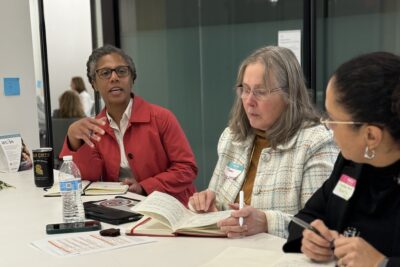
During the presentations, it was clear just how intentionally each partner had designed their work to take root locally. Every community approached the challenge from a different angle, because the childcare ecosystem looks different everywhere. Yet, each strategy reflected a deep understanding of what their community needed to move toward better job quality and stronger supports for childcare educators.
Des Moines leaned into coalition building, strengthening relationships across organizations so that coordination wouldn’t depend on a single grant cycle (a deeper look at this work is featured in an episode of our Unpacked podcast). Baltimore focused on mobilizing workers from across the childcare landscape, building collective power to better advocate for the policy and practice changes the sector has long needed. Pittsburgh advanced a combination of wellness supports and portable credentials — interventions that give early educators tools they can continue to carry with them, regardless of where they work next.
Even with these distinctions, a clear throughline emerged: each partner invested in building the skills, knowledge, and confidence of the people closest to the work. They weren’t completing a set of activities. They were building the ability to continue the work independently.
Akron offers one of the clearest examples of this. Our partners created and facilitated a space for home-based childcare providers to meet regularly to share challenges, compare notes, and surface solutions. The conversations were honest and deeply practical. Overwhelmingly, the best advice came from peers who understood the realities of the work. The group became a trusted space for problem-solving. And even after the project formally ended, the group continues to meet. The practice had now become community-owned.
We heard versions of this story from every Network Partner. Interventions that once lived inside a grant period are now embedded in local practice. Processes, relationships, habits, and shared language have taken hold. This is the type of quiet infrastructure that keeps work moving even when funding sunsets.
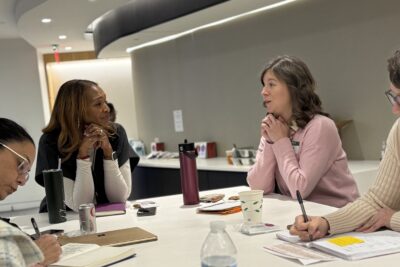
The commitment to sustaining the work was just as evident in the room. Network Partners spent the convening asking sharp questions, raising implications, and openly workshopping how to carry these ideas back home. Their energy wasn’t about closing a chapter — it was about building the next one. In every conversation, you could hear the same guiding purpose. How do we embed this work so deeply that it continues to grow after the funding ends?
At the National Fund, we know initiatives are time-limited. That’s why we design them for what happens after, to make sure the change we spark is meaningful, durable, and owned by the community. This initiative is no exception. The early learning and successes are already shaping the next phase of this work, with more Network Partners involved. Building on what was tested and proven is how we strengthen impact and ensure the that the support we provide leads to truly equitable outcomes.
This initiative reaffirmed what we know to be true: when communities and people gain the skills, knowledge, and structures to carry the work forward, impact doesn’t end when a grant does. It endures. And it grows.


